


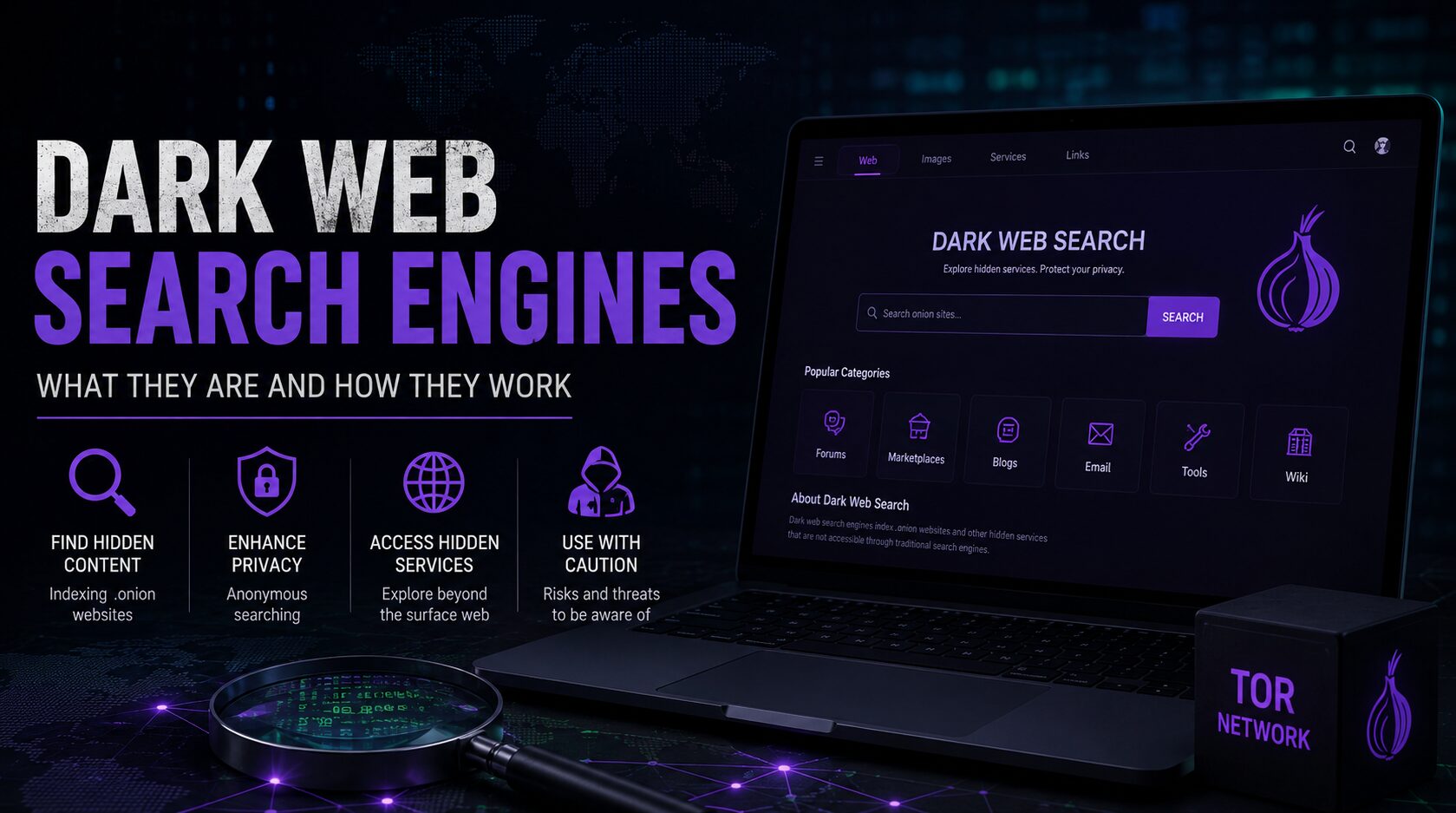
The dark web contains millions of pages that cannot be found through traditional search engines like Google, Bing, or DuckDuckGo. Instead, many hidden websites rely on dark web search engines that are specifically designed to index anonymous services hosted on networks such as Tor. While these search tools help users discover hidden content, they also come with unique privacy, security, and ethical considerations. In this article, you’ll learn what dark web search engines are, how they work, why they exist, and what every internet user should know before exploring this hidden part of the web


The internet that most people use every day is only a small part of what’s actually online. Beyond websites indexed by Google, Bing, and other traditional search engines lies a hidden network of websites that aren’t accessible through normal browsers. This hidden portion includes the dark web, where websites often use the .onion domain and require special software such as Tor to access. Since conventional search engines cannot crawl these websites, specialized dark web search engines exist to help users discover publicly available hidden services.
In this guide, you’ll learn what dark web search engines are, how they work, why they exist, and the security and privacy considerations every user should understand before exploring the dark web.
What Are Dark Web Search Engines?
Dark web search engines are search tools designed to index publicly accessible websites hosted on anonymous networks, most commonly the Tor network. Unlike Google or Bing, these search engines focus on websites that cannot be reached using a regular internet browser.
Because many hidden services intentionally limit their visibility, indexing the dark web is far more difficult than indexing the surface web. Many websites appear and disappear frequently, change addresses, or restrict access entirely. As a result, dark web search engines usually have much smaller indexes than traditional search engines.
Their primary purpose is to help users locate publicly available information within the Tor network rather than relying on manually shared links.
Why Google Doesn’t Index the Dark Web
Google’s web crawlers are designed to scan publicly accessible websites connected to the standard internet. Hidden services on the Tor network are intentionally separated from this public infrastructure.
There are several reasons why Google doesn’t index most dark web websites:
- Onion websites require the Tor network.
- Many sites block automated crawlers.
- Hidden services often change addresses.
- Some websites are intentionally private.
- Many pages disappear within days or weeks.
Because of these limitations, specialized search engines have developed methods for discovering publicly available onion sites.
How Dark Web Search Engines Work
Although they serve a similar purpose to Google, dark web search engines operate differently.
Their crawlers connect through the Tor network instead of the public internet. They visit publicly reachable onion websites, collect page titles, keywords, and descriptions, then store this information inside searchable databases.
When a user enters a search query, the engine compares the keywords against its index and returns matching onion pages.
Unlike Google, these search engines usually cannot rank billions of pages using advanced machine learning. Their indexes are significantly smaller, meaning search results may be limited or outdated.
Why Dark Web Search Results Can Be Inaccurate
One of the biggest challenges is the constantly changing nature of the dark web.
Hidden services frequently:
- Go offline permanently.
- Change their onion addresses.
- Restrict public access.
- Remove content.
- Reappear under new domains.
Because of this, search results often contain broken links or pages that no longer exist. Even well-maintained search engines struggle to keep up with these constant changes.
Common Uses of Dark Web Search Engines
While the dark web is often associated with cybercrime, search engines on anonymous networks also index many legitimate resources.
Examples include:
- Privacy-focused discussion forums.
- Anonymous publishing platforms.
- Independent journalism.
- Academic research projects.
- Whistleblower submission portals.
- Digital rights organizations.
- Security research communities.
Cybersecurity professionals also use these search engines during investigations to understand emerging threats and monitor publicly exposed information.
Privacy Considerations
Using a dark web search engine doesn’t automatically make someone anonymous or safe.
Privacy depends on several factors, including browser configuration, operating system security, internet connection, and browsing habits.
Users should understand that anonymity networks reduce identifiable information but cannot guarantee complete privacy if poor security practices are followed.
Simple mistakes, such as downloading unknown files or revealing personal information, can compromise privacy regardless of which search engine is being used.

Security Risks
The dark web contains both legitimate resources and potentially harmful content.
Common risks include:
- Phishing websites designed to steal credentials.
- Malware disguised as downloadable files.
- Fake login pages.
- Fraudulent marketplaces.
- Scam services.
- Impersonation websites.
Cybersecurity experts recommend treating unknown onion websites with the same caution as suspicious websites on the regular internet.
Never assume a website is trustworthy simply because it appears in search results.
How Security Researchers Use Dark Web Search Engines
Many organizations monitor the dark web as part of their cybersecurity strategy.
Security researchers may search for:
- Publicly leaked company data.
- Exposed credentials.
- Mentions of malware campaigns.
- Discussions about newly discovered vulnerabilities.
- Information related to ransomware incidents.
This helps organizations identify threats earlier and respond before attackers can exploit stolen information.
It’s important to note that legitimate threat intelligence focuses on monitoring publicly available information while respecting applicable laws and ethical guidelines.
Common Myths About Dark Web Search Engines
Several misconceptions continue to circulate online.
Myth 1: They search the entire dark web.
No search engine indexes everything. Many hidden services intentionally remain private or block indexing.
Myth 2: Everything on the dark web is illegal.
Not true. The dark web hosts both legitimate and illegal content. Journalists, researchers, activists, and privacy advocates also use anonymous services for lawful purposes.
Myth 3: Search engines verify every website.
They generally do not. Users must evaluate websites carefully because malicious or misleading pages can appear in search results.
Myth 4: Browsing anonymously makes you completely safe.
No technology can eliminate all security risks. Safe browsing habits remain essential.
Best Practices for Staying Safe
If you’re researching the dark web for educational or cybersecurity purposes, consider these best practices:
- Keep your operating system updated.
- Use trusted security software.
- Avoid downloading unknown files.
- Never share personal information.
- Be cautious of links promising exclusive content.
- Verify information using multiple trusted sources.
- Understand that anonymity does not equal immunity from online threats.
Following good cybersecurity practices is often more important than the software or search engine being used.
The Future of Dark Web Search Engines
As privacy technologies continue to evolve, dark web search engines will likely improve their indexing capabilities while adapting to changing anonymous networks.
At the same time, cybersecurity companies are investing heavily in threat intelligence platforms that monitor publicly accessible hidden services for signs of stolen credentials, malware campaigns, and emerging cyber threats.
Artificial intelligence is also beginning to assist researchers by identifying patterns across large collections of publicly available dark web data, helping defenders respond more quickly to potential risks.
Final Assesment
Dark web search engines play an important role in helping users discover publicly available information hosted on anonymous networks. Although they function similarly to traditional search engines, they operate in a much more dynamic environment where websites frequently appear, disappear, or change addresses.
Understanding how these search engines work provides valuable insight into internet privacy, anonymous communication, and modern cybersecurity. Whether you’re a student, researcher, or IT professional, learning about the technologies behind the dark web can help you better understand both the opportunities and the risks associated with this hidden part of the internet.
Approach the topic with curiosity, but always prioritize safe browsing habits, verify information from reliable sources, and remember that strong cybersecurity practices remain the best defense wherever you browse online.