mark Alex
Introduction: PyO3 in Python updates for security tools
This article shows how to accelerate Python security and privacy tools by replacing CPU bound hotspots with Rust modules using PyO3. The guidance focuses on practical steps you can adopt in production tools, including profiling, example Rust extensions for crypto and parsing, packaging with maturin, cross compile recommendations, and CI integration.
The target audience is cybersecurity engineers, privacy enthusiasts, and developers who maintain long running scanners, parsers, or cryptographic pipelines in Python and need deterministic performance and memory safety improvements without abandoning the Python ecosystem.
Identify CPU bound hotspots
Before rewriting, profile to confirm the hotspot is CPU bound and not IO bound or caused by blocking third party libraries. Use cProfile, pyinstrument, or perf to capture call stacks, and sample during real workload to avoid optimizing the wrong path.
Collect wall clock metrics, CPU time, and memory snapshots, then reproduce a focused benchmark so changes can be measured reliably. Keep the profiling harness isolated from networking or disk noise for reproducible results.
Profiling methodology and benchmark checklist
Adopt a consistent benchmark methodology to compare Python versus PyO3 implementations. Run multiple iterations, keep CPU frequency scaling disabled when possible, and pin cores or containers to reduce noise.
Key checklist items include:
- Collect call graph and hot functions using cProfile or py-spy
- Measure throughput and latency under representative inputs
- Record environment, Python version, and dependency versions
Design rules for porting hotspots to Rust
Not every hotspot benefits from Rust. Port CPU heavy, compute bound, or tight loop logic, such as crypto primitives, heavy parsing, or data transformations. Keep Python orchestrating IO and high level logic to preserve developer velocity.
Design the Rust boundary small, with clear inputs and outputs, and avoid passing large Python objects frequently. Marshal compact binary buffers or byte slices, and document ownership and lifetime expectations at the FFI boundary.
Example 1: Replacing a crypto inner loop with PyO3
Implement sensitive compute in Rust using mature crypto crates for performance and correctness. Expose a safe PyO3 wrapper that accepts bytes and returns bytes, using zero copy where possible with PyBytes.
Keep error handling clear: convert Rust errors to Python exceptions, and avoid panics across the FFI. Example benefits include faster hashing, constant time operations when available, and reduced GC pressure on Python.
Example 2: High speed parsing with Rust
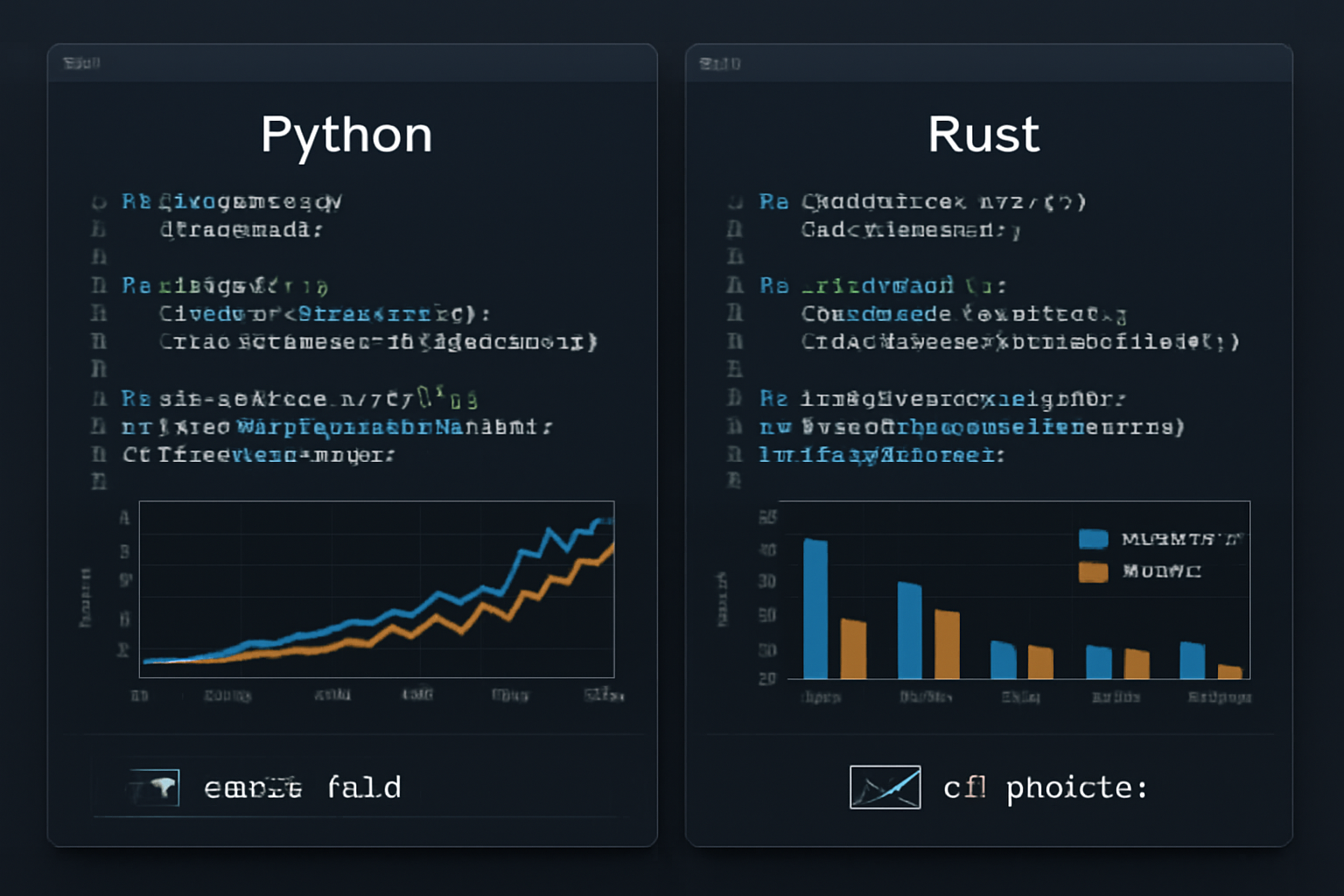
Parsing structured logs or protocol blobs is an ideal candidate for Rust, especially when regex or Python parsing becomes a bottleneck. Implement a streaming parser in Rust, expose an iterator or a chunked parse function via PyO3, and consume results in Python.
Use serde or nom in Rust for robust parsing, and return compact Python structures, such as tuples or dictionaries, minimizing conversions for hot paths.
Packaging with maturin, cross compile and CI tips
Maturin simplifies building and publishing wheels for PyO3 extensions. Develop locally with maturin build for a quick feedback loop, and test publishing to a private index before production release. Use manylinux wheels for Linux distribution compatibility.
Cross compile for target platforms using Docker images or GitHub Actions runners. Typical CI steps include building release wheels, running unit and integration tests, and publishing artifacts. Recommended CI tasks are:
- Build wheels for supported Python versions with maturin
- Run tests under the same interpreters and platforms
- Sign and publish artifacts to private or public registries
FFI security and production hardening
Treat the FFI boundary as a security sensitive surface. Validate all inputs in Rust, bound lengths, and fail fast on malformed data. Avoid unsafe code unless justified and reviewed by peers.
Use address sanitizer and fuzzing, including cargo fuzz, to discover edge cases. Lock crate versions, enable compiler warnings as errors, and integrate dependency scanning into CI to reduce supply chain risk.
Benchmarking results and interpretation
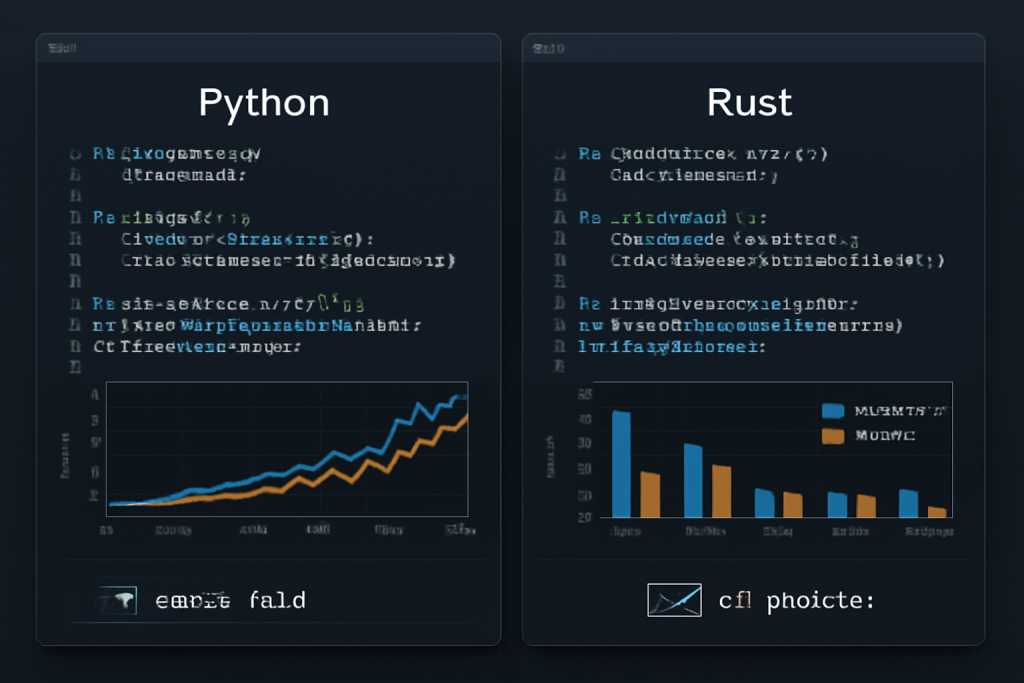
Measure end to end improvements rather than microbenchmarks alone. Document throughput gains, CPU utilization reduction, and changes in memory usage. Expect improvements for tight CPU loops, while overhead for small calls may make benefits marginal.
When reporting results, include raw numbers, environment details, number of iterations, and statistical spread. This transparency helps teams evaluate tradeoffs between complexity and performance gains.
FAQ
Q: When should I not use PyO3?
A: Avoid rewriting IO bound code or parts already optimized in C extensions. If the cost of crossing the FFI boundary cancels out gains, maintain Python or optimize algorithmically first.
Q: How do I debug panics in Rust called from Python?
A: Ensure panics are not unwinding into Python by using catch_unwind or converting errors to Python exceptions. Use logging and backtrace in Rust builds for actionable traces.
Q: Will adding Rust change my package distribution?
A: Yes, you will distribute binary wheels per platform. Use maturin to build manylinux, macOS, and Windows wheels and include clear packaging steps in CI.
Q: How do I keep memory usage predictable?
A: Design APIs that return owned buffers or views, avoid hidden allocations, and prefer explicit memory lifetimes. Test under sustained load to reveal long term behavior in background services.
Conclusion
Moving CPU bound hotspots in Python security tools to Rust using PyO3 offers a pragmatic path to improve performance while retaining the Python ecosystem for orchestration. The workflow starts with disciplined profiling, followed by targeted porting of compute heavy routines, and continues with packaging, cross compile, and CI practices that make deployment repeatable and secure. Teams should minimize the FFI surface, validate inputs strictly, and use Rust tooling such as sanitizers and fuzzers to reduce runtime risks. Packaging with maturin and producing manylinux compliant wheels ensures broad compatibility, and CI integration automates builds and tests across supported Python versions.
In production scenarios, pay attention to measurement, and avoid premature rewriting. When done correctly, PyO3 extensions can reduce CPU utilization, lower latency, and make long running security processes more deterministic. This guide provides a practical roadmap, from identifying hotspots through safe production delivery, enabling security teams to get the best of Python productivity and Rust performance.