mark Alex
Why python audit hooks matter for security tools
Python audit hooks are a low level facility that security engineers can use to observe and intervene on interpreter operations, they were added to Python to provide a uniform place to receive audit events from the runtime and libraries. For teams building security automation, intrusion detection, or sandboxing wrappers, python audit hooks let you monitor calls such as module imports, file accesses, network operations, and execution of subprocesses.
Using python audit hooks in production helps add a defensive layer that can detect risky behavior and optionally block it before it executes, this reduces the blind spots left by surface level checks and gives a consistent event stream to log and act on in real time.
How sys.addaudithook works in Python 3.8+
The core API is sys.addaudithook, which registers a callable that receives two parameters, the audit event name and a tuple of arguments. Hooks run in the thread where the event occurs, they are executed synchronously and must be fast to avoid impacting application performance.
Handlers can log the event, raise an exception to abort the operation, or perform lightweight validation, they must avoid heavy blocking I O or long sleeps because that will stall the triggering code path. Typical patterns are quick checks, sampling, or delegating richer processing to an async logger.
Common audit events to monitor
Not every operation generates an audit event, but many security relevant actions do. Prioritize events that map directly to sensitive operations so your handlers have high signal. Examples include subprocess launches, import of dynamic modules, socket creation, and file access to sensitive paths.
- import, for untrusted dynamic code or plugin loading
- os.open and file path related events, for access to system files
- socket and network connect events, for unexpected outbound connections
- subprocess creation, for command execution and escalation risks
Implementing audit event handlers
Keep handlers small, deterministic, and safe, then register them early in your program lifetime. Below is a concise example that logs and blocks access to a sensitive path. Place this near process start, before importing modules that could trigger events.
import sys
import logging

logger = logging.getLogger('audit')

def audit_handler(event, args):
    try:
        if event == 'os.open':
            path = args[0]
            if path == '/etc/shadow':
                logger.warning('Blocked attempt to open sensitive file %s', path)
                raise RuntimeError('access denied')
        if event == 'subprocess.Popen':
            cmd = args[0]
            logger.info('subprocess spawn: %r', cmd)
    except Exception:
        raise

sys.addaudithook(audit_handler)
In this pattern the handler raises an exception to prevent the operation, or logs and returns to allow it. Choose your blocking policy carefully, and document which events your tool must deny to avoid surprising callers.
Blocking risky operations practical patterns
Blocking at the audit layer is powerful but intrusive, so use clear patterns to limit collateral damage. For example, only block when the origin is untrusted, or when a combination of signals shows high confidence of malicious activity.
- Allow list trusted modules and paths, block others by default
- Use contextual checks, for example inspect the calling module and process arguments before blocking
When blocking, raise exceptions that are documented and caught by your wrapper code so the failure can be translated into clear error messages or metrics. Avoid unexpected termination of unrelated components in the same process.
Performance and measurement
Audit hooks add overhead because they run synchronously on each event, measure the cost in representative workloads. Microbenchmarks that exercise import heavy workloads, file I O, and network operations will show the impact, then tune your handlers to minimize work on hot code paths.
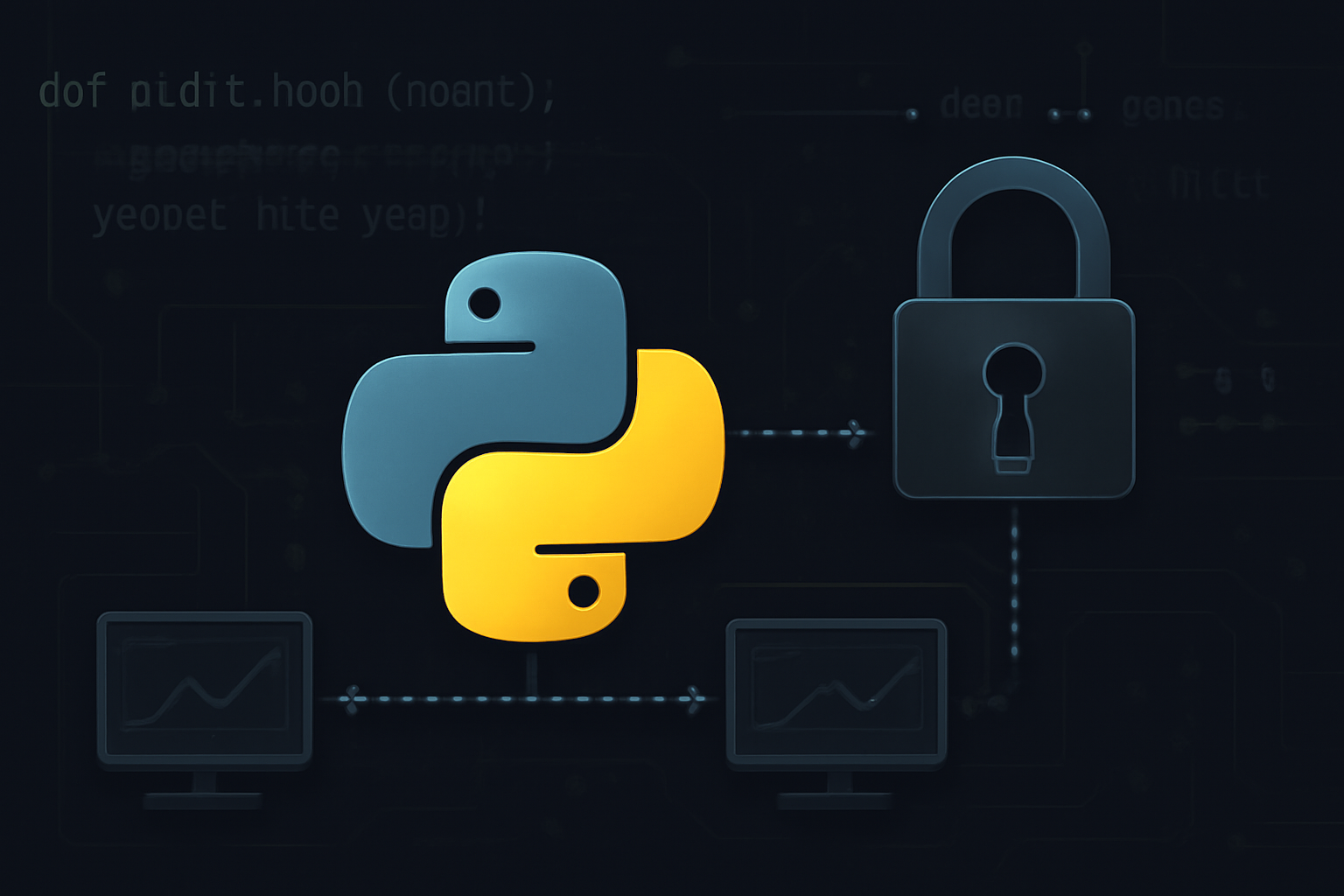
Common strategies to reduce overhead include sampling non critical events, using a small in memory cache to avoid repeated expensive checks, and offloading heavy analysis to an async worker via a non blocking queue.
Deployment caveats and bypass mitigations
Audit hooks are useful, but not a silver bullet. Native extensions or C code may perform operations without emitting Python audit events, and attackers with code execution can remove or replace hooks. Treat audit hooks as one component in a layered defense model, not your only control.
Mitigations include running the interpreter in a restricted container, using seccomp filters on Linux to block syscalls directly, performing code integrity checks at startup, and employing privileged monitoring from outside the process. Combining audit hooks with external process controls reduces bypass risk.
FAQs
This section answers common operational questions about integrating python audit hooks into security automation. The answers focus on practical implications, compatibility, and safe deployment.
Read these to validate your design choices and to understand where audit hooks belong in a defense in depth strategy.
Q: Which Python versions support sys.addaudithook?
A: sys.addaudithook was added in Python 3.8, for full audit event coverage use recent patch releases in the 3.8 plus family or later versions, as more events and refinements have been added over time.
Q: Can an attacker remove my audit hooks?
A: If an attacker achieves arbitrary code execution in your process they can modify or remove hooks, so you must combine hooks with external protections like OS level controls, containers, and monitoring that cannot be tampered with from inside the process.
Q: Will audit hooks cause major latency?
A: Properly designed handlers add small overhead per event, but high frequency events can accumulate cost. Measure with representative traffic, then reduce work inside the handler or use sampling to control latency.
Q: Are all security relevant operations audited?
A: No, not all operations generate audit events, and some extension modules do work without emitting events. Treat audit events as a high fidelity signal when present, but validate with external controls for complete coverage.
Conclusion
Python audit hooks provide a practical mechanism to observe and control interpreter level operations, they are particularly well suited to security automation tools that need consistent visibility into imports, file access, subprocess creation, and network operations. By registering small, well tested handlers early in process startup you gain a defensive stream of events that can be logged, alerted on, or used to block risky actions. However, audit hooks are most effective when integrated into a layered defense approach. Relying on them alone risks bypass by native code or attackers who control the running process.
Plan for performance by measuring handler cost and using caching or sampling for hot paths, and harden deployment with external mitigations such as container restrictions and syscall filters. With careful design, testing, and operational monitoring python audit hooks become a valuable instrument in the toolbox of security engineers and developers building hardened automation tools.