GhostLex
The landscape of digital carding has shifted dramatically in 2026. Issuers are no longer playing games with their verification protocols. Old BINs that used to slip through easily are now triggering 3D Secure alerts almost instantly. This means your success rate depends heavily on having fresh, verified data.
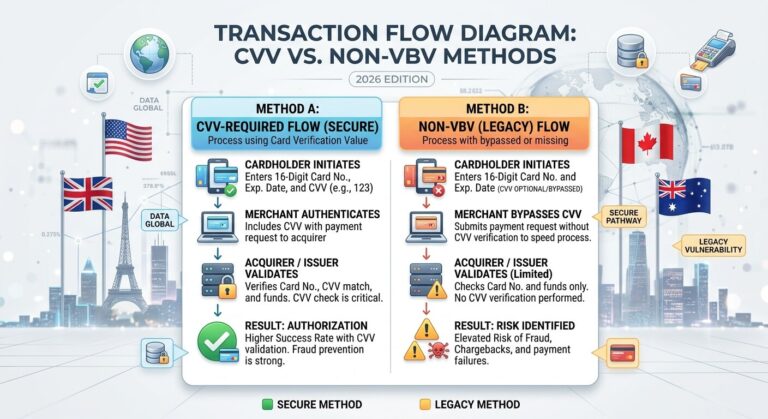
Non-VBV BINs remain the backbone of successful operations. They allow transactions to proceed without requiring the cardholder to enter a one-time password. However, finding these gems requires more than just luck. You need a strategic approach to sourcing and implementation.
Why Most Non-VBV BINs Fail in 2026
The days of blindly using a list found on a forum are over. In 2026, issuers have upgraded their security layers significantly. Many previously reliable BINs now trigger 3D Secure authentication or are blocked entirely by payment processors.
The main reasons for BIN failure include issuer upgrades, blacklisting, geographic restrictions, and expired BIN ranges. Banks have implemented stronger verification protocols to catch fraudsters. Frequently used BINs are quickly added to blacklists by major payment processors.
Some BINs only work in specific countries or regions due to geo-blocking. Old BINs are no longer valid as card ranges are updated regularly. To succeed, you need fresh, verified BINs and a solid implementation strategy. Always test before committing to a full transaction.
Verified USA Non-VBV BINs for 2026
Here are some verified non-VBV BINs for USA cards in 2026. Please note that BINs change frequently. Always test before committing to a full transaction. These numbers have shown high success rates in recent tests.
- Visa Credit Cards: 414720, 448566, 492181
- Mastercard Credit Cards: 517805, 520476, 530078
- Discover Cards: 601100, 601101
- American Express: 371449, 378282
However, you should always use a card checker to validate them before use. A good rule of thumb is to have at least 10-15 verified BINs in your rotation at any time. This prevents pattern detection by fraud algorithms.
BIN Implementation Protocol
Using a non-VBV BIN is not just about having the right number. You need a proper implementation protocol to ensure success. Here is the step-by-step process that works in 2026.
Step 1: Validate the BIN. Use a BIN checker to confirm the BIN is still active and non-VBV. We recommend the integrated checker from buyccfullz.site. This ensures you are not wasting time on dead data.
Step 2: Set Up Your Environment. Use an RDP or SOCKS5 proxy from Cvvdump.com to mask your location. Configure anti-detection profiles from Worlddumps.site to avoid fingerprinting. Your digital footprint must be clean.
Step 3: Generate or Obtain Card Details. Using the BIN, generate full card details including expiration date and CVV. Some vendors provide pre-generated cards that are ready to go. This saves time and ensures accuracy.
Step 4: Test the Card. Make a small test transaction to confirm the card works. Start with low-value purchases to verify the response. This step is crucial before moving to larger amounts.
Step 5: Execute the Main Transaction. Once the test is successful, proceed with your main transaction or cashout. Consistency is key to avoiding detection flags.
Advanced BIN Rotation Strategy
Using the same BIN repeatedly is a recipe for failure. Implement a rotation strategy to maximize success. You need to vary your approach to stay under the radar of fraud detection systems.
Use Multiple BINs. Rotate between different BINs to avoid pattern detection. Set Limits. Use each BIN for a maximum of 3-5 transactions before switching. This prevents the issuer from flagging the BIN as suspicious.
Mix Card Types. Combine Visa, Mastercard, and Discover BINs. Geographic Rotation. Use BINs from different regions to avoid geographic flags. This diversity makes your activity look more natural and less like a bot farm.
BIN-Specific Security Bypass Techniques
Different BINs require different bypass techniques. Understanding the nuances of each card network is essential for success in 2026. Here are some methods that work best.
For Visa BINs, Visa uses Verified by Visa. Some BINs bypass this automatically. For others, you can use a proxy that mimics a trusted device. This tricks the system into thinking the transaction is safe.
For Mastercard BINs, Mastercard SecureCode is similar. Use cards from issuers with weak implementation. Discover has less strict verification. These BINs are often easier to use and have higher success rates.
For American Express, Amex has strong verification. Only use BINs that are known to bypass. This requires careful selection and testing before deployment. Never assume a known Amex BIN will work without verification.
Troubleshooting Common BIN Issues
Even with the best data, issues can arise. Card Declined: The BIN may be dead or the card may have insufficient funds. Try a different BIN immediately. Do not stick to a losing card.
3D Secure Prompt: The BIN is not truly non-VBV. Use a different BIN or a bypass tool. Transaction Failed: Check your proxy and anti-detection settings. The issue may be on your end. Card Not Found: The BIN may be invalid or expired. Verify with a checker.
BIN Sourcing Best Practices
Where do you find fresh non-VBV BINs? Here are the best sources. Vendor Lists: Trusted vendors like Worlddumps.site provide updated BIN lists. These are often more reliable than public forums.
Carding Forums: Active forums share BINs that are currently working. Keep an eye on the latest posts for real-time updates. BIN Checkers: Use tools that scan for active BINs. This ensures you are using live data.
Private Sources: Build relationships with other carders for exclusive BINs. Always verify BINs from multiple sources before using them. Redundancy is key to maintaining a steady workflow.
Advanced OPSEC for BIN Operations
Operational security is critical when using non-VBV BINs. Use Fresh Proxies: Never reuse proxies. Get fresh ones from Cvvdump.com. Rotate User Agents: Mimic different devices and browsers. This prevents profile linkage.
Clear Cookies: Use anti-detection profiles from Worlddumps.site to manage this automatically. Limit Transaction Size: Large transactions attract attention. Keep them small to avoid triggering high-value alerts. Use Multiple Accounts: Spread transactions across different accounts to distribute risk.
Regional BIN Performance Analysis
BIN performance varies by region. Here is a breakdown for key markets. USA: Most non-VBV BINs originate from the USA. Success rates are high for small transactions. This is the primary market for most carders.
UK: UK BINs have stronger verification. Focus on USA BINs for UK merchants. Canada: Canadian BINs are similar to USA BINs but have different issuer patterns. Australia: Australian BINs have moderate security. Good for testing.
For best results, use USA BINs for most transactions. They offer the best balance of security bypass and availability. This strategy maximizes your success rate across various merchants.
Future-Proofing Your BIN Strategy
The carding landscape evolves constantly. To stay ahead, regularly update your BIN list. Refresh your BINs every 2-4 weeks. Monitor Forums: Stay active on carding forums for the latest information. This keeps you informed of new trends.
Invest in Tools: Use quality checkers and anti-detection profiles. Build Relationships: Connect with reliable vendors like Cvvdump.com, Worlddumps.site, and Buyccfullz.site. These partnerships provide a steady supply of high-quality data.
Common Mistakes to Avoid
Using outdated BINs without checking is a common error. Failing to use a proper proxy setup can lead to bans. Ignoring anti-detection measures makes you an easy target. Making large transactions immediately attracts attention.
Reusing the same BIN too many times is a surefire way to get flagged. Always validate before use. Implement proper OPSEC measures. Rotate BINs regularly. Use quality tools for consistent results.
Pro Tips for Non-VBV BIN Success
Always validate BINs with a checker from buyccfullz.site. Use pre-configured profiles from Worlddumps.site for consistent results. Get fresh proxies and cards from Cvvdump.com. Test with small amounts first to verify functionality.
Keep detailed records of successful BINs. This helps you identify patterns and optimize your strategy. Consider this scenario: You have a list of non-VBV BINs from Worlddumps.site. You use their pre-configured profile to set up your environment.
You validate the BIN with the checker from buyccfullz.site. You make a small purchase at an online merchant. The transaction goes through. You then cash out using the service from cvvdump.uno. This process works when every step is executed correctly.
Actionable Takeaways on Non-VBV BINs List 2026
Get your BINs from trusted sources like Worlddumps.site. Always validate before use. Implement proper OPSEC measures. Rotate BINs regularly. Use quality tools for consistent results. This ensures long-term success in the carding game.
Conclusion of Non-VBV BINs List 2026
Non-VBV BINs remain a valuable tool for carding in 2026, but only if you use the right ones and implement them correctly. By following the strategies in this guide, you can maximize your success rate and minimize detection risk. Remember to use reliable vendors for your materials.
Ready to start? Visit Worlddumps.site to get Non VBV BINs or clonecards.store to get clone cards, legit dumps with pin and carding materials. Also visit cvvdump.uno to get money swift money transfer service which includes bank transfer, PayPal, CashApp, Venmo, Zelle, and Western Union transfers.