

Darkweb insights: defensive goals and scope
This article focuses on dark web cross market linkage for defensive intelligence. The aim is to collect marketplace and forum artifacts safely, extract features, and build graphs that reveal vendors and aliases operating across multiple markets. The workflow prioritizes real world applicability for SOC teams and threat analysts.

We will describe a practical Python based pipeline using Scrapy, BeautifulSoup, requests, and NetworkX, plus fuzzy matching and community detection to surface links worth investigating. The emphasis is on defensive use, repeatable tooling, and ethical collection practices.
Ethics and safe collection practices
Before any collection, obtain organizational approval and consult legal counsel to ensure compliance with law and policy. Always operate from hardened, isolated collection hosts, use anonymous network paths appropriate for your rules of engagement, and never interact financially with illicit services.
Log control measures, maintain chain of custody for artifacts, and redact or tokenize sensitive items before wider distribution. Treat collected data as potentially dangerous and handle it in access controlled environments only.
Artifact sources and what to collect
Target sources that yield persistent identifiers and contextual metadata. Useful artifact classes include vendor names, shop pages, PGP keys, contact emails, Bitcoin or crypto addresses, unique product IDs, avatar images, and cross posted messages.
Typical sources to monitor include closed and open marketplaces, vendor shops, forum threads, paste dumps, and archive snapshots. Focus on artifacts that can survive platform churn and be normalized across sites.
- Vendor shop pages and listings: product titles, descriptions, vendor handles
- Forum posts and signatures: contact patterns, repeated phrases, time patterns
- PGP keys and wallet addresses: cryptographic and payment identifiers
- Images and avatars: perceptual hashing can link reused media across sites
Building a resilient collection pipeline with Python
Implement collection using modular Python components. Use Scrapy for structured crawling, requests for single page retrievals, and BeautifulSoup for HTML parsing. Keep collectors stateless when possible and store raw HTML and metadata for later reprocessing.
Key operational controls include rate limiting, randomized user agents, retry policies, and rotating proxies that conform to your legal and policy constraints. Store artifacts in a searchable store such as Elasticsearch or a relational database with strong access controls.
Parsing, normalization, and feature extraction
After collection, parse and so records are comparable across sources. Normalize vendor handles to lowercase, strip diacritics, normalize whitespace, and canonicalize common unicode confusables. Extract features such as email local parts, domain roots, and numeric token patterns from product IDs.
For images compute perceptual hashes, for PGP keys extract key IDs and subkey fingerprints, and for wallets run deterministic formatting checks. Keep raw and normalized values together to support audits and false positive analysis.
Fuzzy entity resolution techniques
Exact matches are rare. Use a combination of string similarity, token overlap, and contextual features to resolve entities. Techniques include Levenshtein distance, Jaro Winkler, token set ratio, and TF IDF similarity on descriptions.
Combine evidence with weighted scoring and threshold rules to generate candidate links. Consider these practical signals when scoring:
- High similarity on vendor handle and shared PGP key or wallet
- Reused avatar images or perceptual hash collisions across sites
- Shared contact channels or repeated unique product identifiers
Constructing entity graphs and community detection
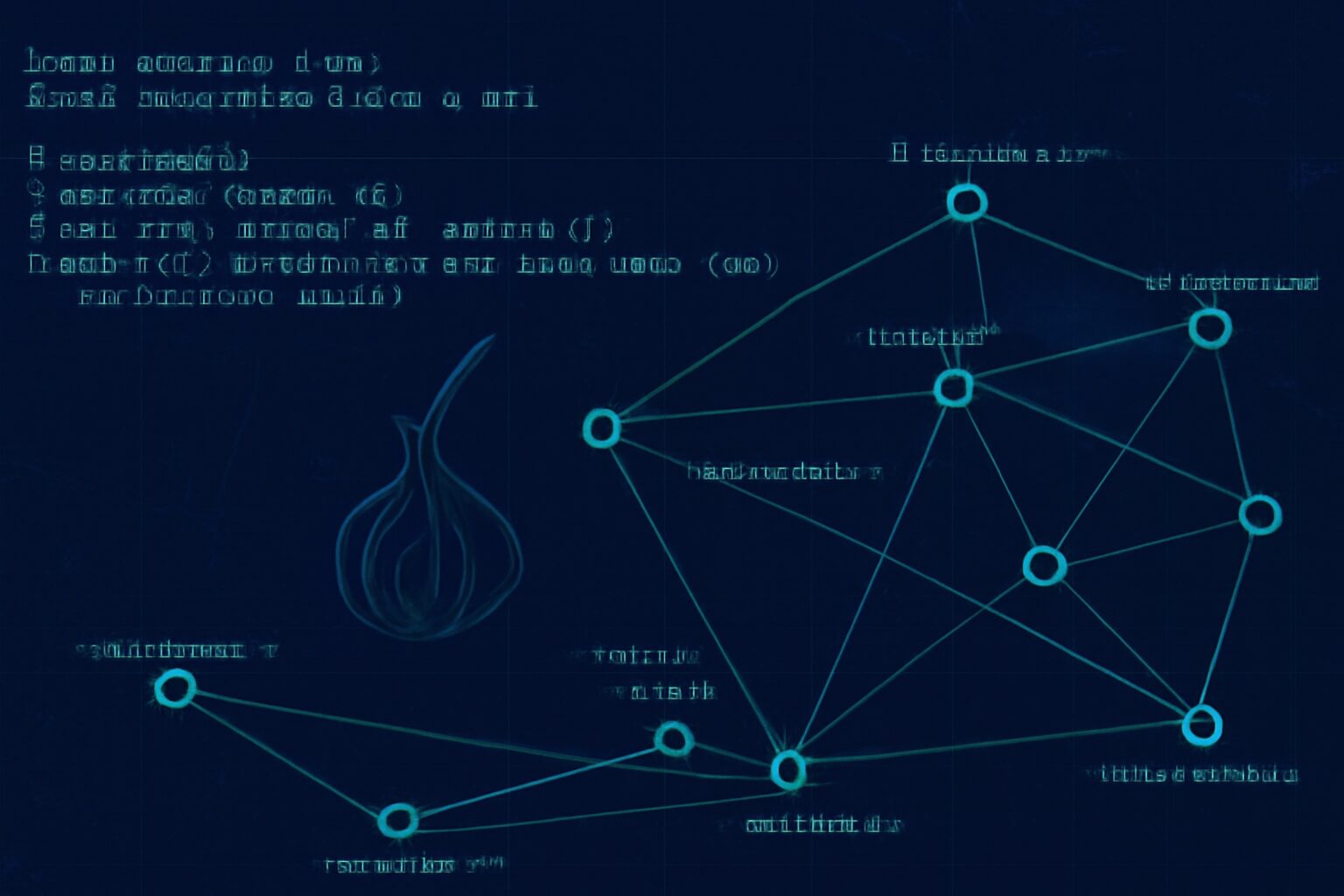
Represent entities as nodes and evidence of linkage as weighted edges. Use NetworkX to construct the graph, attach attributes to nodes such as source site and first seen timestamp, and normalize edge weights based on confidence scores.
Apply community detection algorithms such as the Louvain method to surface clusters that likely represent the same actor or coordinated groups. Visualize with matplotlib, Gephi, or Cytoscape for analyst review, and annotate clusters with scoring metadata to guide triage.
Prioritizing leads for SOC intel
Not every cluster requires immediate action. Prioritize leads by combining linkage confidence, recency, and operational impact. For example, a vendor cluster with active listings for high risk commodities and confirmed PGP reuse should be higher priority than an archival low confidence cluster.
Create analyst playbooks that translate graph findings into next steps: targeted monitoring, wallet tracing handoffs, network indicator generation, or escalation to legal. Automate alerting for clusters that cross a defined risk threshold.
FAQ
Below are common questions analysts raise when deploying a cross market linkage pipeline. These answers are focused on operational concerns and safe practices.
Read the answers and adapt them to your organization policies and threat model.
- Q: How do I avoid legal exposure while collecting dark web data?
A: Operate under formal authorization, use read only collection techniques, avoid transactions, and consult legal counsel. Implement strict access controls and audit logs for all collection systems.
- Q: Which matching signals are most reliable?
A: Cryptographic identifiers such as PGP fingerprints and precise wallet addresses are highly reliable. Reused images and long unique tokens are also strong signals when combined with textual similarity.
- Q: How do I handle noisy matches and false positives?
A: Maintain provenance, keep raw artifacts, tune thresholds based on feedback, and incorporate human review into the triage loop for medium confidence links.
- Q: Can this pipeline scale to continuous monitoring?
A: Yes, with careful engineering. Use distributed collectors, incremental parsing, and a graph database or efficient batch processing to update entity graphs incrementally.
Conclusion
Linking vendors across dark web markets is a high value defensive capability when implemented with care. A concrete Python based pipeline that collects durable artifacts, normalizes data, applies fuzzy resolution, and constructs entity graphs will produce prioritized leads that SOC teams can act on. Operational controls, legal review, and controlled infrastructure are essential safeguards to minimize risk during collection. Incorporating perceptual hashing, PGP fingerprinting, and wallet identification increases confidence in automated linkages, while community detection helps reveal clusters that human analysts should investigate.
When deploying this approach start small, tune matching thresholds with analyst feedback, and automate the low risk monitoring tasks first. Maintain clear escalation paths so that high confidence clusters feed into investigation and response processes. Over time, the pipeline will improve through iterative labeling and by incorporating new signals. The end result is a defensible, repeatable process that adds measurable value to your threat intelligence and SOC workflows.