mark Alex

Darkweb insights overview: PGP key reuse dark web detection
This article focuses on practical methods SOC analysts can use to detect PGP key reuse on the dark web, specifically across onion marketplaces. We concentrate on passive collection, fingerprint correlation, and clustering techniques that reveal reused keys and link them to marketplace identities, listings, and timelines.
The goal is defensive intelligence, not exploitation. All collection should follow legal and policy constraints, and analysts must maintain strong operational security when handling untrusted content from onion services or archived marketplace dumps.
Data sources and passive collection strategy
Useful sources include archived marketplace scrapes, vendor profile pages, public dumps shared on forums, PGP blocks attached to listings, and chatter on vendor threads. Passive collection minimizes interaction with live services, lowering operational risk while allowing broad coverage across multiple markets.
Store collected artifacts as raw text and metadata, including source URL, timestamp, and capture method. Preserve full ASCII armored PGP blocks when present, and tag entries with marketplace context for downstream correlation and priority scoring.
Harvesting PGP keys and fingerprints
PGP keys appear in several forms, such as full ASCII armored blocks and inline fingerprints or key IDs. Extraction should catch both full blocks and common compact representations, for example 40 hex characters for a full fingerprint or 16 hex for a long key ID.
Regexes must be conservative to avoid false positives. After extraction, canonicalize each fingerprint to uppercase hex without spaces, and retain any available UID strings and creation dates found in the block or surrounding text for later correlation.
Normalization and fingerprint matching
Normalize PGP artifacts before matching. For full blocks, parse with a PGP library to derive the canonical fingerprint. For inline IDs, expand short IDs to full length where possible by comparing against full keys already collected or public keyservers.
Matching starts with exact fingerprint equality, then proceeds to relaxed heuristics such as UID overlap, repeated short ID use across listings, and temporal cooccurrence. Maintain confidence scores that combine exact and heuristic signals to drive triage.
Clustering and linkage analysis
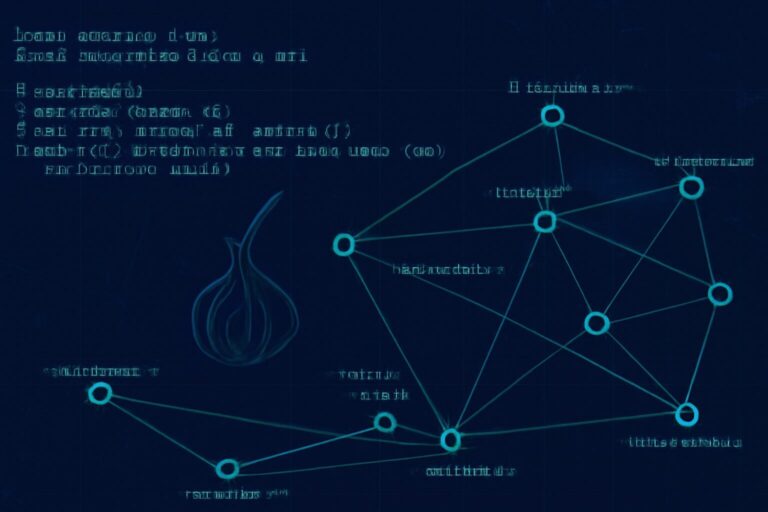
Build a graph that connects nodes for fingerprints, UIDs, vendor handles, listing IDs, and capture timestamps. Edges represent observed cooccurrence, such as a fingerprint attached to a vendor profile or to multiple listings on separate markets.
Apply connected component analysis to identify clusters of reused keys, and use edge weights to prioritize high confidence clusters. Graph databases or in memory libraries simplify traversal and enrichment for analyst review.

Correlating keys to vendor identities and listings
Linkage is strengthened when a fingerprint appears in multiple contexts, for example vendor PGP on profile pages and on listing pages across markets. Cross reference UIDs, posting style, and listing metadata for corroboration.
Time based correlation helps separate reused keys from coincidental matches. If a fingerprint appears repeatedly over time under the same vendor handle, that indicates persistent key reuse. Flag clusters where keys migrate between handles as potential account sharing or operator churn.
Python tooling for SOC workflows
Choose libraries that support parsing, network collection via Tor, and graph analysis. Recommended Python components include HTTP over socks, PGP parsing, and graph tools. Keep code minimal and auditable, run in isolated containers, and avoid automated posting to onion services.
- requests with socks proxy support or stem for Tor control
- pgpy or python-gnupg for parsing and canonical fingerprint extraction
- networkx or igraph for clustering and connected components
- sqlalchemy for relational storage or py2neo for graph databases
Small scripts should implement extraction, normalization, and insertion into a storage layer, plus a separate analysis job that builds the linkage graph and exports flagged clusters for analyst review.
Scaling collection, storage, and indexing
For larger coverage, ingest pipelines must scale. Use a queued collector that writes raw captures to object storage, with subsequent workers performing extraction and indexing into a search or graph engine for fast queries.
- Object storage for raw artifacts, for example S3 compatible stores
- Search index for fast fingerprint and UID lookup, for example Elasticsearch
- Graph or relational store for persistent linkage, for example Neo4j or PostgreSQL
Retention policies should balance investigative needs with privacy and legal constraints. Consider encryption at rest and strict access controls for datasets that include potentially sensitive intelligence.
Operational security, legal constraints, and ethics
Handling dark web data carries legal and ethical responsibilities. Avoid active interactions that could be construed as buying or negotiating, and consult legal counsel before ingesting or storing content that may contain illicit materials.
Document chain of custody, apply role based access, and redact unnecessary payloads before sharing. Emphasize defensive use cases, such as protecting customers, incident response, and law enforcement collaboration where appropriate.
Conclusion: practical next steps and FAQs
Detecting PGP key reuse on the dark web is a high value SOC capability. Combining passive collection, robust normalization, and graph based clustering provides reliable signals that reveal vendor reuse, account migration, and credential sharing across onion marketplaces. Implement small, testable pipelines first, focusing on extraction accuracy and durable fingerprint canonicalization. Prioritize clusters by confidence and operational impact, then feed results into triage or incident response workflows.
FAQs and quick answers: Q1 What is the difference between a key ID and a fingerprint? A key ID is a shortened identifier, while a fingerprint is the canonical long hash for a key, use fingerprints for high confidence matching.
Q2 Which PGP library should I use in Python? Use pgpy for pure Python parsing or python-gnupg for integration with local GnuPG instances, pick based on your environment and security posture.
Q3 Can I expand short key IDs reliably? Only when you have full keys available for comparison, short IDs can collide, so prefer full fingerprints for linking.
Q4 Is it legal to collect marketplace data? Laws vary by jurisdiction, check with legal counsel, avoid active transactions, and store data under approved retention and access controls.