

Introduction: certificate transparency monitoring python for SOCs
This article presents a hands on, production oriented approach to certificate transparency monitoring python teams can deploy for real time visibility into newly issued certificates. It focuses on using aiocertstream for live feeds, integrating zgrab2 or ssltest for fingerprints and TLS metadata, persisting events in PostgreSQL, and applying deduplication and enrichment to flag suspicious certificates and domain impersonation.

The guidance targets cybersecurity professionals, privacy-focused engineers, and SecOps teams building reliable ingestion pipelines that feed Slack, SIEMs, or internal case management systems. Practical snippets, deployment tips, and performance tuning notes are included to help you move from prototype to SOC ready monitoring.
Architecture overview and components
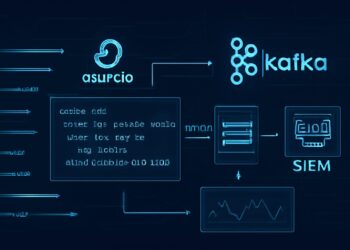
A production CT monitor is an event pipeline: a real time feed ingestor, a parser and enrichment stage, a dedupe and storage layer, and an alerting or export sink. Using Python, the ingest stage favors asyncio based libraries for scale, PostgreSQL for durable storage and JSON handling, and external scanners for fingerprint enrichment.
Key components you will typically use include aiocertstream for feeds, zgrab2 or ssltest for active TLS probes, async workers for enrichment, a dedupe index in PostgreSQL, and alert outputs such as Slack webhooks or syslog to feed a SIEM. Consider a message queue or lightweight broker for backpressure and retries.
Real time feed ingestion with aiocertstream
aiocertstream provides an asyncio interface to Certificate Transparency log feeds, delivering JSON messages for new SCTs and precerts. Use an event loop with robust reconnect logic, exponential backoff, and optional process supervision to handle transient network issues or log provider rate limits.
Ingestion best practices include validating the JSON schema, extracting SNI and leaf certificate DER data immediately, and pushing minimal normalized events to your enrichment queue. Keep the ingest worker lightweight, avoid blocking calls, and batch writes when possible to reduce DB pressure.
Parsing and fingerprinting with zgrab2 and ssltest
Active enrichment with zgrab2 or ssltest complements CT data, verifying observed public keys, ciphers, and TLS chains. Trigger targeted probes for suspicious hosts rather than probing every certificate, to limit scanning noise and avoid rate limits or abuse complaints.
Store deterministic fingerprints such as public key SHA256, SPKI hash, and certificate serial number. These fingerprints enable linkage across logs and time, and they support heuristics that detect reused keys or certificates issued to lookalike domains.
Storage and deduplication in PostgreSQL
PostgreSQL provides reliable storage, JSONB indexing and upsert semantics suitable for CT data. Use a normalized table for canonical certificates and a separate event table for raw log appearances, linking by certificate fingerprint to avoid duplicates across logs.
Dedupe heuristics include primary key on fingerprint, TTL based reingestion windows, and an event counter that increments on repeat sightings. Index certificate metadata used in queries, for example common name, SAN entries, and issuance timestamp, to keep alert queries fast.

Enrichment and heuristics to flag suspicious certs
Apply enrichment to combine CT events with passive DNS, WHOIS, and SSL scan results. Heuristics to prioritize alerts include newly seen public keys, certificates issued for high risk brands, multiple similar domains, and certificates chaining to unusual CAs.
Score events with a weighted system, for example: brand risk, key novelty, SAN composition, and DNS age. Use thresholds to route low risk data to a data warehouse and high risk items to SOC channels for analyst review.
Alerting to Slack and SIEM integration
For human readable alerts, format concise Slack messages with actionable fields: domain, timestamp, fingerprint, certificate subject, and a link to the full event in your dashboard. Provide severity and quick actions such as mute or escalate.
For automated ingestion into a SIEM, send structured JSON over HTTP or syslog, including canonical identifiers and enrichment tags. Ensure idempotency tokens or event ids accompany alerts so the SIEM can deduplicate at ingest time.
Performance tuning and handling rate limits
Scale ingestion by partitioning by log source or by hashing fingerprints across worker groups. Use asyncio pools and bounded queues to prevent memory spikes, and tune PostgreSQL connection pooling for peak write throughput.
Respect external rate limits when probing; implement adaptive throttling that reduces scan frequency on timeouts or abuse responses. Add metrics for queue lengths, processing latency, and probe success rates so you can react to bottlenecks quickly.
Deployment, monitoring, and operational FAQs
Deploy the monitor as containers managed by Kubernetes or as systemd services with process supervisors for simplicity. Use health checks, liveness probes, and rolling updates to maintain availability. Store configuration and secrets in a vault, and limit service account permissions for scanners and database access.
Operational monitoring should include alert thresholds for backlog growth, error rates, and unusual certificate volumes. Export Prometheus metrics from your Python workers, and visualize them in Grafana for alerting and trend analysis.
- Q: How do you avoid false positives from brand certificates? A: Maintain a trusted list and apply lower scoring to known legitimate issuers, while flagging only unexpected key reuse or lookalike SAN patterns.
- Q: Can I probe every certificate with zgrab2? A: No, target enrichment to suspicious or high value certs to avoid rate limits and ethical scanning concerns.
- Q: How do you handle CT log reorgs and duplicates? A: Use fingerprint based canonicalization and event ids, plus periodic reconciliations against stored certs to merge duplicates.
- Q: What minimal retention do you recommend for events? A: Retain canonical certs long term and keep raw event appearances for a rolling window that supports your threat hunting needs, typically 90 to 365 days.
Conclusion
Building a production grade certificate transparency monitoring python pipeline requires attention to stream reliability, lightweight ingestion, and smart enrichment. By combining aiocertstream for real time feeds, selective zgrab2 or ssltest probes for fingerprinting, and PostgreSQL for durable canonical storage, teams can create an efficient system that surfaces meaningful risk without overwhelming analysts.
Focus on deduplication, scoring, and adaptive probing to keep costs and scan noise under control. Instrument the pipeline with metrics and alerts, integrate with Slack for analysts and with a SIEM for automated workflows, and adopt secure deployment practices including secrets management and least privilege. With these components, your CT monitor will provide continuous situational awareness, support threat hunting, and enable fast response to certificate based impersonation or key misuse, while remaining operationally sustainable and respectful of external scanning constraints.