

Introduction to PGP key correlation for Darkweb insights
PGP key correlation is a focused technique within Darkweb insights, useful for attributing accounts, tracking vendor reuse, and elevating indicators into actionable intelligence. This article describes a defensive pipeline that collects PGP public keys and signatures from .onion sites and marketplaces, then normalizes and correlates them for operational use.

The goal is practical: show safe collection patterns, parsing methods, fingerprinting rules, correlation approaches, and automation examples that scale. Emphasis is on defensive analysis, privacy respect, and legal caution while harvesting publicly posted PGP material for threat investigations.
Data sources and safe collection practices
Start with a clear source list: vendor profile pages, listing descriptions that embed keys, PGP key servers, paste services, and forum posts on Tor accessible hosts. Prioritize reproducible sources, and log collection metadata such as URL, retrieval timestamp, and fetch method for later validation.
Follow safe handling guidelines: perform crawling from dedicated, isolated analysis hosts, use Tor through Tails or Whonix style isolation, and avoid interacting with illicit content beyond passive retrieval. Maintain documentation of legal review and data retention policies before ingest.
- Source types: profile pages, marketplace listings, paste sites, public key servers
- Operational controls: isolated hosts, strict egress filtering, read only storage for raw fetches
Parsing PGP keys on .onion pages
PGP public keys are often embedded as ASCII blocks that begin with —–BEGIN PGP PUBLIC KEY BLOCK—– and end with —–END PGP PUBLIC KEY BLOCK—–. Use HTML parsing combined with regex extraction to isolate these blocks from page content, do not rely on brittle heuristics that depend on page layout.
After extraction, run a parser such as python-gnupg or pgpy to validate the block and extract metadata: key id, fingerprint, algorithm, creation date, and user ids. Validate that the block decodes cleanly before storing derived artifacts.
Normalizing fingerprints and metadata
Normalize all fingerprints to a canonical format, for example uppercase full fingerprint without spaces. Store both short key id and full fingerprint, and include derived forms like OpenPGP v4 fingerprint. Consistent normalization is essential for matching across differently formatted sources.
Also capture context fields: posting URL, posting actor alias, raw key block, and source fetch timestamp. This metadata allows later triage, manual verification, and evidence retention for SOC workflows.
Correlation techniques and graph analysis
Use a combination of direct and fuzzy correlation rules. Direct rules include identical full fingerprint matches, identical key ids, and shared user ids inside key comments. Fuzzy rules include similar creation timestamps, overlapping user ids, and repeated reuse of the same signing subkey across profiles.
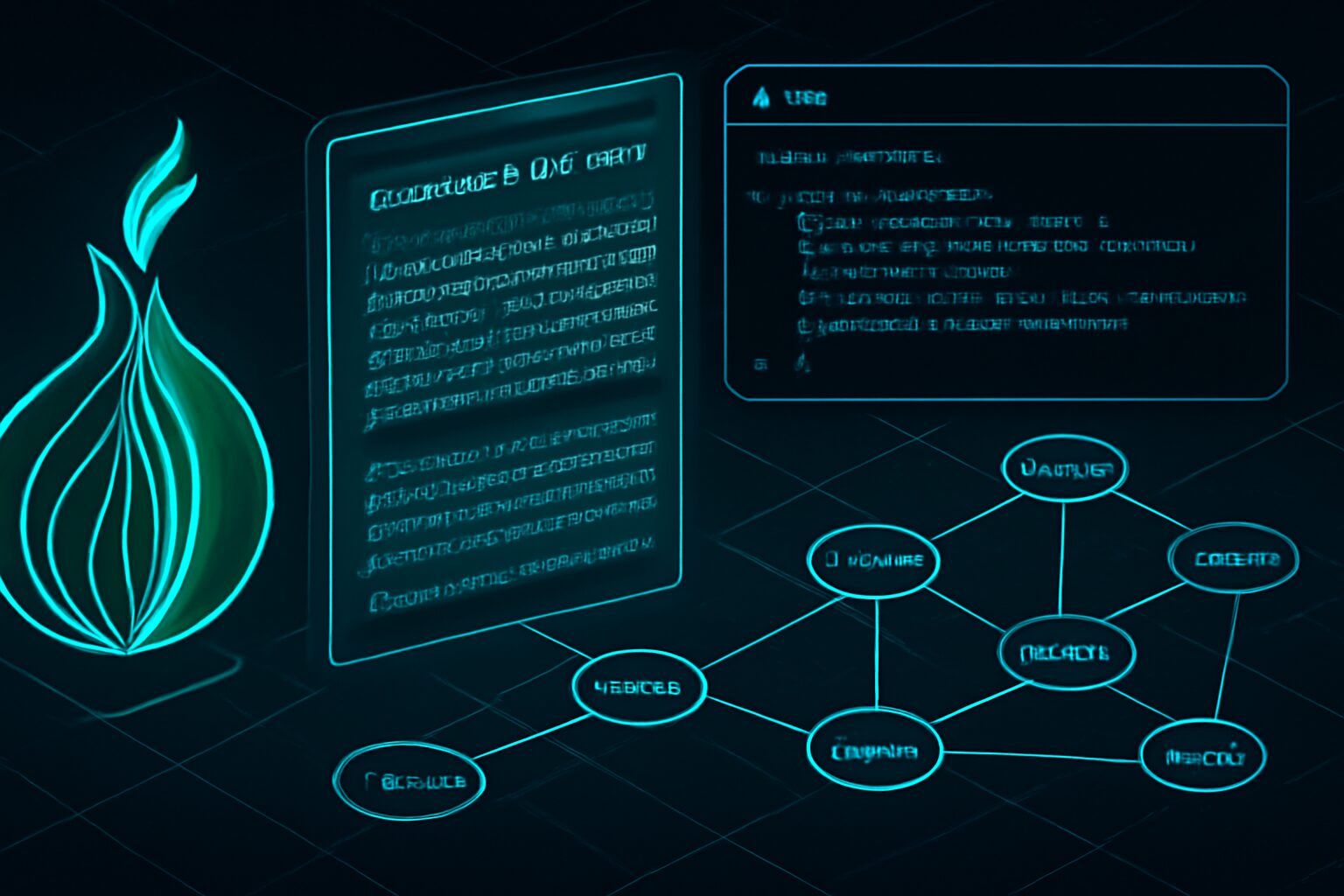
Construct a graph where nodes represent keys, accounts, and URLs, and edges encode relationships such as posted_by, signed_by, or hosted_at. Graph databases or network analysis libraries reveal clusters that indicate a single actor controlling multiple accounts or listings.
Tooling and automation with Python
Automate ingestion and parsing using Python, for example requests via Tor, BeautifulSoup for extraction, and pgpy for key parsing. Use async fetch loops and backoff logic to avoid overloading sources, and persist normalized records into a database such as PostgreSQL or a graph store like Neo4j.
Common automation steps include fetching, extracting key blocks, validating with a PGP library, normalizing fingerprints, and inserting records. Maintain a small set of helper scripts for revalidation and bulk reprocessing when schemas change.
- Suggested libs: requests, BeautifulSoup, pgpy, async frameworks, psycopg2 or neo4j driver
- Automation tips: rate limit, rotate collector identities, maintain clear logs
Privacy, safety, and legal considerations
PGP material posted publicly is often allowed to be collected, however legal frameworks vary. Seek legal review for your jurisdiction, redact sensitive downstream artifacts when sharing, and adhere to data minimization requirements for privacy. Treat keys as intelligence only, and do not attempt to contact suspected actors.
Follow operational safety: isolate collectors from production networks, avoid credential reuse on analysis hosts, and manage access to the collected dataset. Maintain audit trails for every fetch and transformation step to support compliance and chain of custody.
Operationalizing alerts and integrating into SOC
Convert correlations into actionable alerts, for example when a known malicious fingerprint reappears, or when clustering links a new account to a tracked actor. Integrate these indicators into ticketing systems and SIEMs with context fields and evidence links for analyst triage.
Provide playbooks that map correlation results to response actions: escalate high confidence matches for analyst review, add medium confidence items to watchlists, and throttle low confidence noise by automated verification workflows.
FAQs
Quick answers to recurring operational questions about PGP key correlation and Darkweb insights collection practices.
- Q: Is it legal to collect PGP keys from .onion pages?
A: Often yes for public content, but legal rules vary. Obtain legal review and log all collection activity before large scale harvesting. - Q: How do you handle duplicate key formats?
A: Normalize to a canonical fingerprint form, store raw block, and keep both short and full ids for robust matching. - Q: What if a key is signed by another unknown key?
A: Record the signature relationship, attempt to fetch the signer key, and use transitive graph expansion to find clusters. - Q: Can correlation produce false positives?
A: Yes, always quantify confidence, include provenance, and prioritize analyst validation for high impact alerts.
Conclusion
PGP key correlation is a practical, defensible technique within Darkweb insights that turns scattered public artifacts into contextualized intelligence. A repeatable pipeline covers safe collection, robust parsing, canonical normalization, graph based correlation, and automated alerts. When implemented with operational controls and legal oversight, this pipeline empowers analysts to attribute activity, detect actor reuse, and produce high value indicators for SOC teams.
Operational success depends on clear provenance, careful normalization, and conservative escalation rules that reduce false positives. Combine Python automation with reliable PGP libraries, an auditable storage layer, and graph analysis to scale. Finally, protect your collectors and your data with isolation, legal review, and a strict need to know policy, so that the intelligence you generate remains ethical, usable, and defensible in real world incident response and threat analysis workflows.